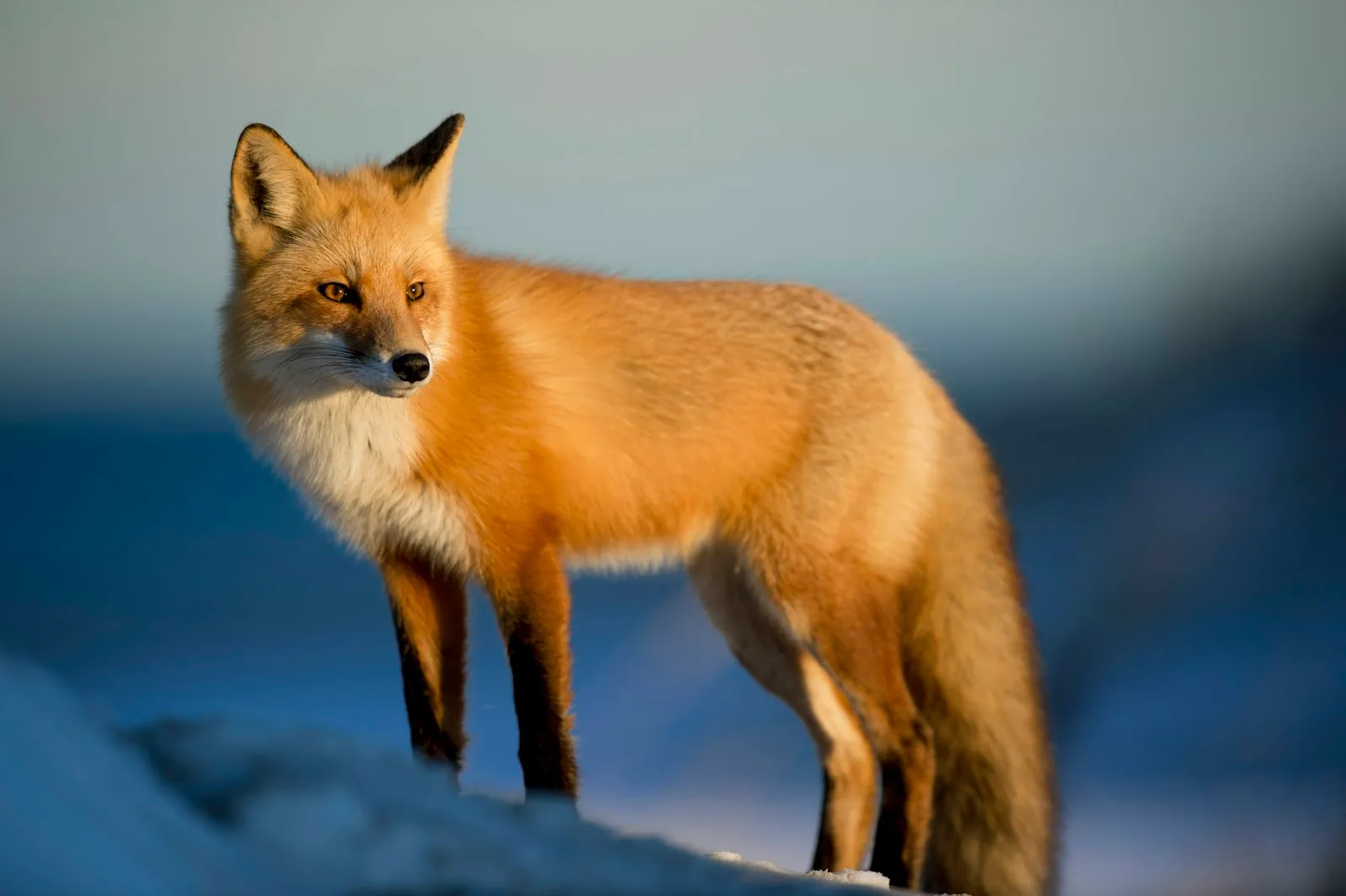

The Arctic fox nearly disappeared from Scandinavia in the early twentieth century. Fur hunting reduced the population to fewer than a hundred animals by the 1920s. After hunting was banned, the recovery was slow — complicated by competition from the red fox, which has moved north as temperatures have risen, and by the boom-and-bust cycles of the lemming population that the Arctic fox depends on.
Today there are around 500 Arctic foxes in Scandinavia, a population that is recovering but remains fragile. I have been photographing them, when lemming numbers allow, for the past ten years.
The lemming cycle
The Arctic fox’s fate is bound to the lemming’s in a relationship that is almost mechanical. When lemmings are abundant — which happens in cycles of three to five years — foxes produce large litters, cubs survive at high rates, and the population grows. When lemmings crash, foxes struggle to reproduce, and the population contracts.
Climate change is disrupting the lemming cycle. Warmer winters mean more frequent freeze-thaw events that ice over the tundra, cutting lemmings off from the vegetation beneath the snow. Lemming peaks are becoming less predictable, less pronounced, and less frequent. The foxes feel this in their reproduction.
On Svalbard
The Svalbard population is separate from the mainland Scandinavian foxes and is doing better — partly because Svalbard’s lemmings are more stable, and partly because the archipelago’s seabird colonies provide an alternative food source that mainland foxes lack.
In summer, the foxes work the seabird cliffs like farmers working a field, moving methodically from nest to nest, taking eggs and chicks when they can. They cache what they cannot eat, burying food in the permafrost against the winter. A single fox on Svalbard may maintain hundreds of food caches.
The photographs in this series were made over four summers and two winters. The winter images required temperatures below minus 30 and a tripod that I warmed under my jacket between shots. The foxes, for their part, were indifferent to the cold.